Showing posts with label novel. Show all posts

Friday, March 06, 2009

House of Stairs by William Sleator

House of Stairs by William Sleator, is a novel about 5 teenage orphans(Oliver, Peter, Blossom, Lola, and Abigail) who find themselves in a strange building. Its not a hospital or a prison but it has no walls or ceiling, nothing but endless flights of stairs leading to nowhere and a strange red machine.

They begin to realize that the machine give them just enough food to keep them alive but only whenever they become to do certain gestures & acts. So they started make many efforts to please the machine and let it rule their behaviour. Initially they have to perform some kind of dance but soon they realize they have to be cruel to each other in order get any more food. Then teenage continually face hopeless situations, creating suspense. What follows is- set of events highlighting adversity they face and brings out their personalities—strengths and vulnerabilities.

While teenagers find themselves in an enigmatic suitations and place, narrative is not the enigma but the story is about these five characters, their weaknesses and strengths, their reactions to stress and about the relationships they develop.

Book is very well written and very interestingly highlights the conflict of society's rewards for conformity and personal satisfaction of asserting one's individuality.

Life of Pi by Yann Martel

Life of Pi by Yann Martel, is a riveting adventures tale about a shipwrecked teenager(Piscine Patel) son of Pondicherry Zoo keeper who is stuck with a Bengal Tiger and their never-ending journey of up & downs, tragedy and triumph,. Book walks through details of zoo-keeping, connections between animal & man, Pi's religious & spirtual beliefs.

Pi's family decides to relocate to canada by taking much of its menagerie with them and selling the others. Half the way their ship sinks and Pi find himself stranding in a lifeboat with bengal tiger named richard parker, a zebra, a hyena. i.e ofcourse everybody is on each other's menu.

what follows is 200+days at sea with series of adventure journey of Pi with uneasy truce with his companion to find home and how they(Pi & richard/tiger) manage various troubles, main-easting island,etc.. by calling upon everything he learned both in practical & spiritual sense. Pi become to believe that his & tiger's fate are interlinked and they develops an deepening relationship.
"I must say a word about fear. It is life's only true opponent. Only fear can defeat life. It is a clever, treacherous adversary, how well I know. It has no decency, respects no law or convention, shows no mercy. It goes for your weakest spot, which it finds with unerring ease. It begins in your mind, always. One moment you are feeling calm, self-possessed, happy. Then fear, disguised in the garb of mild- mannered doubt, slips into your mind like a spy. Doubt meets disbelief and disbelief tries to push it out. But disbelief is a poorly armed foot soldier. Doubt does away with it with little trouble. You become anxious. Reason comes to do battle for you. You are reassured. Reason is fully equipped with the latest weapons technology. But, to your amazement, despite superior tactics and a number of undeniable victories, reason is laid low. You feel yourself weakening, wavering. Your anxiety becomes dread. Fear next turns fully to your body, which is already aware that something terribly wrong is going on. Already your lungs have flown away like a bird and your guts have slithered away like a snake. Now your tongue drops dead like an opossum, while your jaw begins to gallop on the spot. Your ears go deaf. Your muscles begin to shiver as if they had malaria and your knees to shake as though they were dancing. Your heart strains too hard, while your sphincter relaxes too much. And so with the rest of your body. Every part of you, in the manner most suited to it, falls apart. Only your eyes work well. They always pay proper attention to fear.Quickly you make rash decisions. You dismiss your last allies: hope and trust. There, you've defeated yourself. Fear, which is but an impression, has triumphed over you. The matter is difficult to put into words. For fear, real fear, such as shakes you to your foundation, such as you feel when you are brought face to face with your mortal end, nestles in your memory like a gangrene: it seeks to rot everything, even the words with which to speak of it. So you must fight hard to express it. You must fight hard to shine the light of words upon it. Because if you don't, if your fear becomes a wordless darkness that you avoid, perhaps even manage to forget, you open yourself to further attacks of fear because you never truly fought the opponent who defeated you."
Book isn't about silly, meaningless adventure story but a mystery about man's relationship with life & faith. while the book does explains in some details about all major religious belief and how a sincer belief on something can make it happen but doesn’t offer answers or suggestions but many questions.

I like the fun tone of the book even while handling such heavy subject. Its not preachy but a fascinating tale which might or might not make you believe GOD but will make you wonder, questions your belief and awareness.

Sunday, March 30, 2008

On Chesil Beach by Ian McEwan


On Chesil Beach by Ian McEwan, is story of one night in Florence's and Edward's life, Its about couple's experience of culture shift in 60s/70s. both being terrified yet thrilled about the wedding night and story is the journey of how both of them reaching brink of their adulthood and their private worried, shared joy.

Its sexual explicit yet it does touch deep into human emotions and illustrates the difficulties of communication & understanding of what goes in their inner secret world.


ONLY suitable for Adult. Good quick read & travel time killer.

Friday, February 29, 2008

The Secret History by Donna Tartt

The Secret History by Donna Tartt, was recommended by my good friend/ex-boss and almost immediately I find this book on sale at Bankside. Without second thought and haven’t read any reviews about this book before hand- I bought this book. I wasn’t disappointed.

Story based in small liberal art fictional college at velmort, where small group(Charles, Camilla, Henry, Bunny, Francis) of elite students who signed up ancient greek course. Julian Morrow, professor of course accepts only few students every year. Richard Papen who recently relocate from California from a life which he was desperate to live behind. He finds myself initially unable to signup for ancient greek classes and later not just manage to join but gradually get to know the other student in the group. He later finds out that Bunny was blackmailing fellow-mates about a crime their committed during an effect to recreate greek ancient bacchanal. when Bunny’s intention become questionable, Richard had to decide to side with other friend to kill Bunny to cover up. Aftermath of Bunny’s dead is the second half of the book, in which group collapses with psychological stress. Professor Julian finds truth eventually and decided to leave the college without making crimes public and letting the students to deal with their problem in isolation.

Its a philosophical fiction with ethical, moral dilemmas. Although with no big surprises, journey of the characters in situations and they aftermath scrambling- that I find very interesting.

It sure is very exciting page turner. I would highly recommend.

Tuesday, November 13, 2007

Happy Days by Laurent Graff

Happy Days by Laurent Graff, is often amusing but well-written funny novel with poignancy and also without getting heavy.

Set in contemporary France book narrated by the main character, Antoine- who believes he had lived life by his eighteenth birthday. But anyways he decided to give life more chance by getting a job, marriage and kids. He didn’t feel himself. So he decides to retire, a longtime dream. This choice ofcourse is not out-of-laziness but out-of-strong personal philosophy. His belief is nothing to do with life. So by the age of 35, he checks-into retirement home called Happy Days to await death. He bought his own grave and claims to be emotionally blank and wanted to be free from any ties. From him, settling at Happy Days is big experiment to understand individual’s life by stripping out of all diversions. But ofcourse he could do that completely. Despite the age difference, he find himself to be accepted by locals and settles into a routine uneventful and peaceful daily life. That’s until he develops a special bond with an old woman suffering from terminal cancer. He develop unique bond with her and goes on a very special journey. His understanding is proximity of death don’t bring elder near to the truth life is pretense right up to the end.

Author highlights various incidences which led him to retirement. A decade later he find myself in unchanged, a fitting end to the character that is unwilling to live his life.

Novel is more narrative journey. Graff manages to keep it light but without being very superficial. Author control his theme and episode of death stops- very well. Author making depressing argument that world is retirement home and all are biding the time before the trauma of death.

Its a pleasant read and Iam waiting to see Jonny Depp's version.

Wednesday, October 10, 2007

If god was a banker by Ravi Subramanian

Bought this book in airport book shop for transit reading and 'Banker' in the title attracted me to this book. First impression- good read(not great). Its typical Indian movie story- story is about fresher men from B-school who rise corporate ladder in MNC bank, one the honest way(Swaminathan) and the other(Sundeep Srivastava) the dishonest way. ofcourse in the end, dishonest guy realize his mistakes. All right, book is fictional but still bad guy is very guy and good guy is too good. That to me, is suspense killer and book become very predictable.

Nevertheless book is decent, narrative is simple(especially if you have exposure to banking industry), easy to read and its good walk-thru of ugly side of power/money.

Will recommend for lite read over flight journey or if you like typical masala movie then you will like this as well. But if you are choosey then you can do away with this book and you wouldn’t be missing anything.

Thursday, March 08, 2007

An equal music by Vikram Seth

An equal music by Vikram Seth, is very unusual novel. Story set in London, Venice and Vienna, is about Michael Holme violinist with Maggiore Quartet finding his ('so-called')love, Julia McNicholl who he had lost almost 10year ago.

Book is emotional roller coaster journey of Michael's object of obsession hidden deep in Michael's heart, which appeared to have departed straight from his mouth bypassing his brain.

Michael and Julia falls in love and play together but when Micheal has a nervois breakdown because of stern and very demanding violin teacher he leaves Vienna(and Julia) with warning. After some months & year, he tries to reach Julia and no luck. Ten years still in love with her, he meets her in London when she was attending his concert with his quartet. Still a pianist but Julia is now married to American banker with a child. Also due to her auto-immune disease, she is gradually becoming deaf.

Will past hunting, both begin to meet again, under the dark shadow of her marriag and her tragic hearing losses. Julia agrees for tour of Vienna and Venice with Michael and Maggiore Quartet, during such brief, magical time everything seems to be possible.

The idea that Violin is Michael's true passion over his obsession with Julia, is very interesting plot. thought at the end, he end-up satisfying neither.

Onething stands out in this novel, is that Art/Music/Poetry is as great as deep as truth, as important as love, and can be as redeeming.

This is story with flawed romance but very decent light read to fill your time. Personally I enjoyed and admired the narrative power of Seth's words.

Monday, January 29, 2007

Einstein's Dreams by Alan Lightman

Einstein's Dreams by Alan Lightman, is a fictional collection of stories dreamed by Albert Einstein applying the cosmic theories to an imaginary village. Explored concepts include: counter-clockwise time, frozen time, accelerated time, the end of time, and other parallel realities. Combining drama, movement, video, original music, and high-tech lighting, this production brings Lightman's meditations to life for a spectacular exploration of the fourth dimension.

Its wonderful fiction to imagine what Einstein might have been thinking in the nights before submitting his historic manuscript on theory of relativity in 1905. If time, energy, gravity, and even space are not the constants that they seem intuitively to us to be; if our understanding of those concepts is based on our own limited experience in the universe and on each of those dimensions; if their interactions might yield previously unexpected results, then how different might our world be from other possible worlds? Might time not stand still in some worlds? Or be rushed, or slowed to a snail's pace? Repeated endlessly? What would be the interpersonal consequences? Would the inhabitants notice? Would they care?

Lightman is absolutely brilliant. Despite that fact that he teaches physics at MIT, you don't need even the slightest background in the sciences to understand him. He's fascinating -- and from the standpoint of fiction writing, his stories are beautifully and simply written, so straightforward yet somehow lyrical. He's very moving in his simplicity.

This little book is proof that a simple idea need not result in a trivial composition.

Thursday, January 04, 2007

The Green Mile by Stephen King

Stephen King's The Green Mile.., is about people causing harm to others. Death row in the Louisiana State Penintary is termed as Green Mile, where to be executed prisoners are held till they time to walk on a green floor to the electric chair.

Story told by Paul Edgecom, who is in charge of the death row inmates and to make sure prisoners are executed peacefully(!!?whatever that means) . Paul treats inmates with dignity and respect even with their history and conviction of horrific crimes. Assisting him are Brutus Howell, Dean Stanton and Harry Terwilleger, Percy Wetmore. Percy is newly-appointed guard, an sadistic pleasure of watching someone be put to death on the electric chair. Coffey got special healing powers and Paul-Coffey forge a strong bond. Many pages flows describing the positive bond between Paul and Coffey, contrasted to the negativity that Percy brings to the proceedings.

The book handles many topics and illustrates the true nature of the death penalty, showing how cruel and barbaric and how innocent people can easily be put in positions where they are executed unjustly. Its about compassion---Coffey a GOD-like figure who dies for humanity's sins, crucified by people who don't know better. Yet he himself is not capable of complete forgiveness, and thus involving him getting his revenge. Ultimately everyone seeks to harm someone else, whether justified or not. The parents of the children Coffey is believed to have killed have venom in their minds against him. Percy and a maniacal prison inmate seek nothing more than perverse destruction. Even the prison guards really have one sole purpose: to help killing. Coffey is who truly seeks to heal, but he too kills with his love.

King's stories are mixture idealism and cynicism view. Always, they exists a bleak view because of their exploration of darkness by humans. While the film does end up portraying a sanitised view of King's vision, underneath the surface lies the depiction of how depraved we "civilised" beings can behave.

Friday, December 08, 2006

The Hungry Tide by Amitav Ghosh

The Hungry Tide by Amitav Ghosh,.. focuses on Sunderbans - a vast archipelago of islands lying below Calcutta on the gulf between India and Bangladesh.

Two travelers explore in forest of Sunderbans. Piya, a scientist -- Indian grewup in American of Indian, is researching about river dophins which are inhabit in tidal waters and Kanai, an translator and businessman from Delhi, is visiting his aunt to receive an old notebook written by his uncle before his died. Piya with illiterate boatman, Fokir, to guide her through the backwaters is in search for the dolphins and Kanai accompany her as a translate. Conflict between the three triggers each to learn about themselves during the face dangers at Sunderban.

Sunderban is explained in detailed, about its history and precarious ecology of the endangered river dolphins and Bengal tiger living on these waterlogged islands and their conservation project. Kanai's uncle's notebook reveals the shocking story of the Morichjhapi incident, where tens of thousands of displaced refugees try and settle on one of the uninhabited islands but are violently evicted by the government in the name of conservation.

Even with very different characters with different mind-sets, Author questions about human's role in nature. A suspenseful drama of love and survival that has particular resonance in the aftermath of the December 2004 tsunami.

The Hungry Tide is a compelling book about ordinary people bound together in an exotic place that can consume them all. It's the basest of human emotions, love, jealousy, pride, and trust.

Monday, December 04, 2006

One Night @ The Call Center by Chetan Bhagat

Chetan Bhagat, got lucky with company of young lady while long borring train. she share a story of a night at the call center in Delhi with condition that it would be his next book. The story revolves around and told by Shyam's voice, a team leader in call center. His coworkers Varun, Esha, Radhika, his girl friend Priyanka and an aged Military Uncle. Shyam getting over from breakup of his relationship with Priyanka and from other threat all of them face on the uncertainty of their future at the center. The happenings of the night describes the romance and break up interludes of Shyam and Priyanka as flash back.
scripting makes you think Chetan is expecting the novel to inspire some filmmaker? Ok, it does have all ‘Dil Chahata Hai’ stuff.

as rediff commented - ON@TCC has its audience well defined-those who swot nights at call centres and have little to show for it but Adidas shoes to wear to work, and One Night @ The Call Center to read.

‘One Night @ The Call Center' is good door to peep into genX, their jobs, life, attitude, values & their dreams.

Wednesday, November 08, 2006

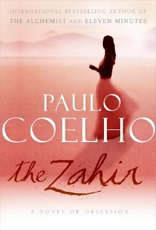
The Zahir by Paulo Coelho

The Zahir by Paulo Coelho, begins with a glimpse or a passing thought. It ends in obsession.

Lead character is wildly successful novelist and celebrity who lives in Paris with his wife Esther, a war correspondent who speaks four languages. Their marriage hit rock bottom. Ester wanting to move-on in search of her own happiness. When Esther disappears, he is tormented and traumatized by the mystery of what has happened to her. Has she been kidnapped, killed, or has she left him for another lover? He struggle in trying to come to terms with something he cannot understand or control: the mystery of Esther's absence. It is very hard for him to let go of his feeling that she is the only one who fills his life with meaning. The inner journey he takes opens him up to new possibilities.

Its doesn't match Coelho's masterwork 'The Alchemist', but for those who are willing to travel lightly, there are some interesting insights here on obsessive love, the emptiness of celebrity-status success, and the courage needed to square off against the mysteries and rewards of letting go of ego and stepping into the dark unknown. Coelho show extraordinary insight into what it is to be a human being in a world full of possibility.

Monday, October 30, 2006

Londonstani by Gautam Malkani

Londonstani by Gautam Malkani,.. is story with intriguing ride to perception and humor in an argot comprised of English, Punjabi urban slang.

The story is told entirely from the viewpoint of Jas, Hounslow district teenage. Jas is a perceptive and intelligent nerd. Yet he has quelched those attributes in a successful effort to join a small gang of "rudeboys," the desi version of gangstas who pride themselves on their style and fashion.His rudeboy group is led by Hardjit(Sikh body builder), Armit(Hindu nationalist) and Ravi(who brags about his sexual exploits, seemingly more imagined than real). The rudeboys themselves are an amalgamation of conflicting cultural notions. Their independence leads them to distance themselves from some of their parents' traditions. This inevitably leads to what Jas calls "complicated family-related shit."But group was very proud of their heritage and their "desiness" and hatred for their Muslim counterparts.

Jas school teacher attempt to rescue him by hook him with Sanjay, a former desi student who studied economics at Cambridge.
Hardjit and Jas help run an illicit cell-phone reselling operation; their schoolmaster's efforts to mainstream and rehabilitate leads well-off Sanjay, who turns out to be even more corrupt. Sanjay introduces to "Bling economics" group which takes Jas in particular under his wing and the boys are soon living large as they move from being menial cogs in the stolen phone trade to relatively significant players.

Then Jas also involves not getting a crush on attractive Muslim girls like Samira, but Jas begins pursuing a relationship with her on the sly and hopes that Hardjit, the alpha dog of his group of friends and a hard-liner about crossing such lines, never finds out.

Better still, the novel concludes with a clever plot twist that upends the notions of identity and race Jas spends the novel struggling with. It's almost enough to make you forget that, despite those strengths, much of the book is a conventional coming-of-age story about a kid aching for the stability of friendship or a date.

Author adeptly combines the threads of each of these elemental struggles into a generally workable whole. Book nicely handles variety of internal, generational, racial, religious, and societal conflicts.

Tuesday, September 05, 2006

The Namesake by Jhumpa Lahiri

Recently I was talking to a friend in US. while normal friends talk was over, she started telling about how her daughter is growing-up with american attitude/questionings/culture and how that's freaking her out. and just back of that discussion, I heard about this new movie from Meera Nair, that triggered my interest towards this books.

The Namesake by Jhumpa Lahiri is a the cross-cultural, multigenerational story of a Hindu Bengali family’s journey to self-acceptance in Boston suburbs. book trys to explain the life of a first-generation immigrant boy Gogol, from his birth into his 30's as an architect in New York.

before share my thoughts about the books.. I saw harsh criticism for The Namesake especially from some Bengalis. some have attacked the book for portraying Bengalis poorly or for not being representative of certain Bengali immigrant archetypes. I too have my share of criticism but with regards to portraying bengalis - although I am not a bengali to comment on this but I support the author. frankly representation does not bought me since I dont expect the author of novel to work with the burden of sociological representation on her shoulders all the time. so if you looking for culture representation of bengalis aboard then you are better-off reading journals or scholarly studies.

Ganguli family from their tradition-bound life in Calcutta through their fraught transformation into Americans in 60s. On the heels of their arranged wedding, ashoke & ashima Ganguli settle together in Massachusetts. Ashoke is engineer by training, adapts far less warily than his wife, who resists all things American and pines for her family. Ms.Lahiri explores the themes of the complexities of the immigrant experience and foreignness, the clash of lifestyles, cultural disorientation, the conflicts of assimilation, the tangled ties between generations... and describes an Indian family torn between the pull of respecting family traditions, and the American way of life. It’s a tale of love, solitude and emotional upheavals with an amazing eye for detail and ironic observation


"For as grateful as she feels for the company of the Nandis and Dr. Gupta, these acquaintances are only substitutes for the people who really ought to be surrounding them. Without a single grandparent or parent or uncle or aunt at her side, the baby's birth, like most everything else in America, feels somehow haphazard, only half true."

Book describes quick summary of many years in Gogol teen life, raise some questions.. Once Gogol becomes an adult (when he goes off to Yale), the focus of the author is on a person almost entirely defined by his relationship to either his family or his lovers. I think this reduces Gogol's complexity and tends to make his character one dimensional. While in college, does Gogol not go through what undergrads regularly undergo, such as the struggle to figure out what to study, and does he not have anything else pulling at him, academically, culturally, even perhaps politically? And Gogol described as guy with no friends.. that's very hard to believe. may be representation of 70s american attitude towards immigrate child.!? but certainly that's not true today. perhaps because he does not have friends, his relationships with his lovers become the centre of his life.

The Namesake seems to me a quintessentially american book, this being a country always somewhat in flux socially, culturally, generationally. What seemed to me particularly indians in her telling is less the details, lush as they are, as the tenderness she shows towards the individual members of the family in their longings, in the restraint of their expressions, and in their struggles to find their own individual spaces and identities across a double continental divide.

book also covers how I as an Desi-American often stumble and ultimately get lazy on names and bring out a nickname that fits frame of reference. just to quote - their daughter's name is Sonali (beautiful) and her name is changed into Sonia. It's a great lesson for me to be very attentive to names because it shows a compassionate interest in someone's culture (its true, not just indian, even second italians, polish, greeks in america). Now, names are divisive. But it seems to me that lazily plunking a nickname down on top of someone feels like divisive...

It is this gentle handling of Gogol and his parents that made this book good read and yet it is in no way an overly sweet or sentimental portrayal. family is imperfect, their problems difficult, Gogol's search for identity leading him down somewhat cold and convoluted paths at times. No easy answers are offered, yet the ending, which is by no means pat, points towards a future in which Gogol may find a way to incorporate his family's past into his identity without losing himself in it.

This book is not lifestyle reference guide to understand next generation indian kids growing up in western culture but certainly gives us a dimension in to their life. would recommend to all specialy those in US(first/second/..generations Indians & americans too).

Monday, August 28, 2006

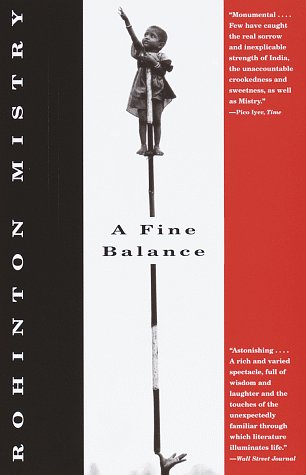
A Fine Balance by Robinton Mistry

A Fine Balance by Robinton Mistry is set in an unnamed Indian city during unknown period.

The novel about four primary figures who carry the weight of the centuries of Indian culture, religion, and conflicts. There are contradictions too deep to overcome. The poverty is too grinding. The caste distinctions are also massive. Despite their disparate backgrounds, the four develop into something like a family, as they lean on each other in the face of financial hardship, personal troubles, and political turmoil.

But inevitably events eventually catch up to the little group and the centripetal force of their affection for one another proves no much for the centrifugal force of a society that offers little or no economic opportunity, no real prospects for single women, discriminates against religious minorities, and is embarked on a genuinely evil campaign of mass sterilizations of unwilling citizens. All of these forces come to bear on the apartment dwellers in ways that range from the merely sad to the truly horrific.

Through the dramatic and often shocking turns their lives take, we get an intimate view, not only of their world, but also of India itself in all its extraordinary variety. As the characters move from distrust to friendship and from friendship to love, book creates an enduring panorama of the human spirit in an inhuman state.

A Fine Balance is so ineffably sad that it seems only fair to caution readers that they may find it too heartbreaking. In the end, it avails the oppressed naught that their oppressors may share a skin color, it is ideas such as freedom and equality, opportunity which really matter and which provide the setting in which people, such as those so lovingly portrayed here, can maintain their balance and realize their dreams.


Wednesday, August 23, 2006

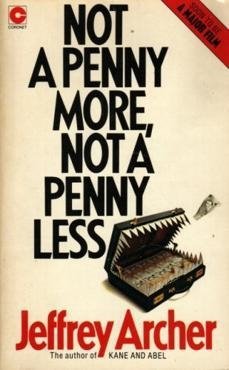
Not a penny more not a penny less by Jeffrey Archer

Not a penny more not a penny less by Jeffrey Archer... this story is about scam by Harvey Metcalfe, a self-made American millionaire, finalizes an elaborate scam in which he cheats four strangers out of a million dollars. All four of them thought they would be rich; the next day, however, they discover that they are penniless. Stephen Bradley, one of the four strangers and a Harvard mathematics graduate now studying at Oxford, gathers together the other three and makes a proposition: although none of them have ever met each other before, they will now work together to get the one million dollars back from Harvey Metcalfe, using whatever means are necessary. At last, the other three--a doctor, a French art collector, and a lord--agree, and the plot is set in motion.

may be its just me..but I think, Jeffrey Archer is man of personal flaws.. but his books are fun.

this story begins - Henryk Metelski changes his name to Harvey Metcalfe. Wealthy enough at the start of the book, he is a person who would cheat people to earn more. The story starts with Prospecta Oil Company Shares. David Kesler a Harvard graduate working for Prospecta Oil in all innocence made four people invest in Prospecta Oil Shares. David was told that the company had made a fantastic strike in the North Sea and when they announce it the shares of the company would be at an all time peak. The four people involved were: Stephen Bradley, Dr. Robin Oakley, Jean-Pierre Lamanns and Lord James Brigsley. Stephen Bradley was David's friend during Harvard days and a visiting American professor at Oxford. David made a casual visit to the Dr. Robin Oakley, where he mentioned about the strike. David met gallery owner Jean-Pierre Lamanns when he went to buy a piece of art to furnish his apartment and he met Lord James Brigsley while having a drink. The four invested a good chunk of money in Prospecta Oil, only to realize they were tricked . They decided to get their money back.

All the four came up with their individual plans using their skills and area of expertise. James who initially did not come up so easily with the plan, ultimately surprised the other three with his plan. The four with their neatly laid plans went ahead in pursuit of their goal of defeating Metcalfe and getting their money back.

Not a Penny is a fun, light read--and well worth the afternoon it will take to complete it.

Friday, August 18, 2006

The Alchemist by Paulo Coelho

The Alchemist by Paulo Coelho..is novel tells the tale of Santiago, a boy who has a dream and the courage to follow it. After listening to "the signs" the boy ventures in his personal, Ulysses-like journey of exploration and self-discovery, symbolically searching for a hidden treasure located near the pyramids in Egypt.

when you really want something to happen, the whole universe conspires so that your wish comes true..

When he decides to go, his father's only advice is "Travel the world until you see that our castle is the greatest, and our women the most beautiful". In his journey, Santiago sees the greatness of the world, and meets all kinds of exciting people like kings and alchemists. However, by the end of the novel, he discovers that "treasure lies where your heart belongs", and that the treasure was the journey itself, the discoveries he made, and the wisdom he acquired.

An interesting way to look at this story is to ask the question: who is the title character? Alchemy is such a potent idea–the changing of one element into another has had a grasp on the human mind for as long as we have known about elements. But, of course, alchemy has secondary meanings–an alchemist transforms. Is the boy an alchemist, for transforming himself and the lives of those around him? Is God the alchemist, for transforming the destinies of humanity?

Described as a ‘publishing phenomena’ Paulo Coelho has a remarkable ability to teach one the age old lessons of life with a gentle reminder of the magic and wonder one believes in as a child; he makes it seem like we’re not alone at any point of time, we’re one with this world and it with us. The small things in life, like the gentle breeze and the sun have been given more purpose and magic, personalities by themselves.

The beautiful thing about the book is that the each individual reader can interpret the lessons in his own way, as Lynn Andrews says “Paulo Choelho gives you the inspiration to follow your own dreams by seeing the world through your own eyes and not someone else’s.” Need anything more be said?

"The Alchemist" is a novel that may appeal to everybody, because we can all identify with Santiago: all of us have dreams, and are dying for somebody to tell us that they may come true. The novel skillfully combines words of wisdom, philosophy, and simplicity of meaning and language, which makes it particularly readable and accounts for its bestselling status.

Everything the boy does is something you and I could do. I guess that’s the point of the book.

Thursday, July 27, 2006

1984...by George Orwell

1984 by George Orwell... is a highly antagonistic book of a totalitarianism government in a time of instability. BigBrother and ThoughtPolice constantly monitor all citizens of Oceania with telescreens and if people oppose the party, they were killed. The plot focuses around Winston Smith and the women he later falls in with (Julia) as they begin to realize the truth, quietly defy the party in any small ways they can, and eventually must struggle against the most terrible brainwashing of all.

Parts of the novel seem to be able to link to everyday life governments and their actions within their countries, and more and more nations are using their own form of doublespeak to make deep or embarrassing mistakes, or jobs seem less so by re-arranging the words. (ie: local Garbageman= negative connotation, Regional Trash Collector= important/respectful connotation)


I learned the author - George Orwell was the pen name of Eric Arthur Blair, born on 1903 in Bengal/India. Although his family moved to England when he was very young, he returned to Burma to work for British Imperial Police, which later resigned and moved back to London to pursue career in writing. author's preferred title The Last Man in Europe was regretted by publisher. I read author didn't object and suggested to change 1980 but since writing took longer than expected he changed it 1982 and than to 1984. popular belief is that author switched two last digit of the year he wrote (1948) but some believe it may also have been an allusion to the centenary of the Fabians socialist organization founded in 1884.

Must admit this book is very difficult to read. Not sure Why must the most interesting books are boring read. It took quite an effort for me to finish this book. While the concepts flow brilliantly, the writing style becomes a turn off, with many lengthy paragraphs, sentence structure and vocabulary sometimes went over my head, I found it challenging to read it for long periods of time.
Interesting to share - while talking to greece/poland/czech friend they remember USSR years and consider this book as prophecy not fiction novel.

After fighting his way to the highest rung of German power, Hitler began inspiring massive support for his warped idealism. Using patriotism, swastikas, genocide, the incineration of historical documents and a mobilization of forces throughout Europe, his dictatorship became the woe of the twentieth century. A stain of darkness stretched across the world, and his legacy undoubtedly inspiration for this classic novel, 1984.


1984 revolves around
3 'superstates' which are Eurasia, Eastasia, and Oceania. All of these states are in a constant state of war with one another, yet all are self contained, and require no trade with one another, and therefor do not require war as a means of economical necessity. However, it is their feeling that as long as a constant state of war is prevailing, the people will be too preoccupied with the war effort to worry about whether or not the present political system is working. The government constantly reminds the people that when they win the war, Oceania will rule the world, and life will be better. So therefor, as long as the war is going (as it always will be), peace within the states can prevail.
Another interesting characteristic I noticed about the book, was the fact that he only revealed to the reader the full names of only three characters in the book. The book features the main character, Winston Smith, who is a man in his late 30's and a member of the 'outer party' - the lower of the two classes. Winston Smith works for the government in one of the four main government buildings called the Ministry of Truth where his job is to rewrite history books in order for people not to learn what the past used to be like. As the book is beginning, Winston begins to contemplate setting himself against Big Brother and the Party, but of course is reluctant, knowing that even thinking about such a thing could easily result in his death. The three sentences sum up what the party stands for, and they are:
"War is Peace"
"Freedom is Slavery"

"Ignorance is Strength"
All appear to be oxymoron's, but make some sense once the reader has progressed through the book, for example, the term "War is Peace" has a simple, but somewhat complex explanation.

Perhaps the strongest aspect of the last half of the novel is Orwell's blunt answer to the question of why. Winston has read a book describing how the Party stays in power, but he is plagued by the question of why. When he asks O'Brien this question, the answer is as blunt as could be imagined: power for the sake of power. And we are confronted, not with some abstract homily about absolute power, but the reality of complete and utter social power perpetuating itself, confident of its own immortality. There should be tears in our eyes at the ending, for different reasons than Winston's tears, as Winston sits in the Chestnut Tree, thinking about how much he loves Big Brother.


to quote few the book:
  • Big Brother is always watching
  • Who controls the past controls the future: who controls the present controls the past.
  • Your worst enemy, he reflected, was your own nervous system. At any moment the tension inside you was liable to translate itself into some visible symptom.
  • It's the one thing they can't do. They can make you say anything - anything - but they can't make you believe it.
words like "Thought Police" and "Big Brother" have almost become part of western culture. I really didn't know what those terms meant until I read this book.

Important thing to remember while reading 1984 is the book never intended to be a prediction of the future. It was satire of political fiction. however, book capture the right track concerning future possibilities of a New World Order, or total government control. may be Orwell's hope in writing the book was to warn people of political warning signs he saw. In an age when more and more of our everyday activities are being scrutinized, Big Brother may not be so far off after all.


Reading this book on back of my trip to Germany(visiting hitler's camps,..) made me questions about freedom, free speech, responsiblities of human being..


atleast attempt to read 1984, It's worth the effort...

click here online eBook Source: 1984 by George Orwell

Monday, June 19, 2006

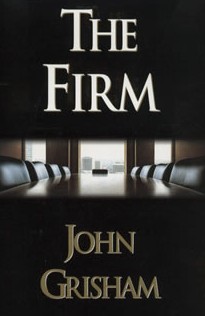
The Firm by John Grisham

The Firm by John Grisham, is legal thriller.

Story is about Mitch an Harvard law graduate, married to his girlfriend from college. Mitch takes an job offer from Memphis with a great pay, house, car.. ignore offer from other big law firms in New yOrk. Initial days of working at Memphis was great and he worked hard to get chance to become a partner in few years. Suddenly, Mitch's co-workers die in an accident. Later he learn from FBI agent that the law firm is a cover for Italian Mafia. They have a system in which new lawyers are successfully lured into the firm with promises of secure wealth. By the time a lawyer knows its actual operations, he cannot leave. No lawyer has actually quit the firm alive. He soon learns that his house, office and even his car are bugged. Finally, Mitch manages to escape plot from the firm and steal million dollars from various bank accounts belonging to the firm and also giving enough evidence to FBI to bust the firm. Mitch and his family are shown quietly enjoying their newfound wealth in the Caribbean.


This made me wondering in real sense.. The Firm is fairly a typical: a young man who is so stupid as to not realize he's just joined a Mafia-front law firm, is still smart enough to outwit the Mob and the Feds. The only interesting issue that I can think of here is that we're supposed to overlook things like his greed, infidelity and general callowness because he's the little guy going up against the big guys. This seems to capture Grisham's essential view of life: little guy good, big guy bad.

If you remove your logic hit then book is good read and the movie did justice to the book.

Saturday, May 06, 2006

Of Marriageable Age by Sharon Maas

Of Marriageable Age by Sharon Maas... is a rich, colorful explosion of Indian culture moving across three separate timelines that begin in different places tied to the three primary characters.

Three main characters dominate the plot - Nataraj, brought up in a village in Tamil Nadu, Savitri, the daughter of a cook on a estate owned by an English couple, and Sarojini, brought up in Georgetown, British Guiana. Nataraj and Sarojini who are of the same generation eventually meet in England. Each chapter is devoted to one of these three characters and the characters take it in turn to tell their stories. However, the confusing part of the plot is that these stories are not told in the same timeframe at all, but this is not made clear to the reader in the initial stages of the novel.

With a willing suspension of cynicism on the part of the reader, this novel could be quite fun, but it does require some tolerance from the reader. It is a carefully crafted piece of writing, praise-worthy for its ability to entertain and absorb the reader, but reads more like a fairy-tale for adults than any realistic portrayal of the life of diasporic Indians.

I remember reading fitting review for this book.. "If you like sweet, sappy love stories, or rich Indian culture and tradition, or even if you just liked the movie "Monsoon Wedding", this book is highly recommended for you."